About PMS&T

What is pulsed magnetic science & technology?

Pulsed Magnetic Science and Technology (PMS&T) leverages pulsers—pulsed power drivers or machines that generate controlled, high-intensity bursts of electrical energy—to explore fundamental physics, advance energy solutions, and enhance national security. By generating intense magnetic fields and pressures, pulsers enable research in inertial fusion, high-energy-density physics, and dynamic material response. These systems produce controlled shocks, long-duration dynamic loading, and powerful radiation sources, supporting applications in fusion, materials testing, and diagnostic advancements. As a versatile and scalable technology, PMS&T is driving breakthroughs in scientific discovery and real-world innovation.

Electromagnetic field
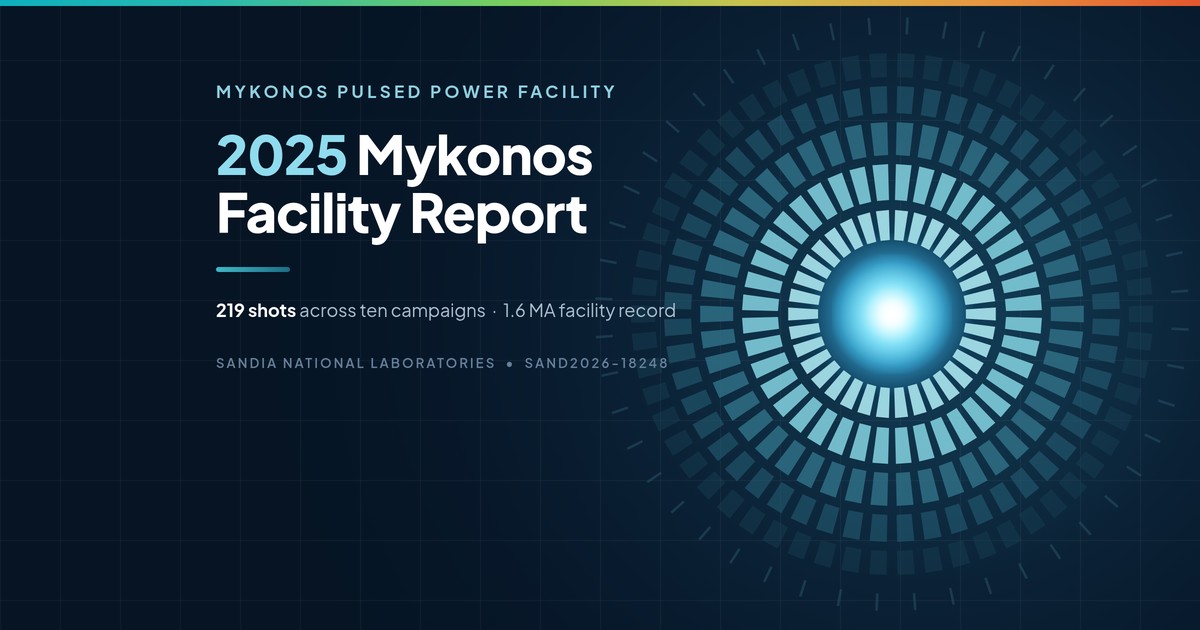
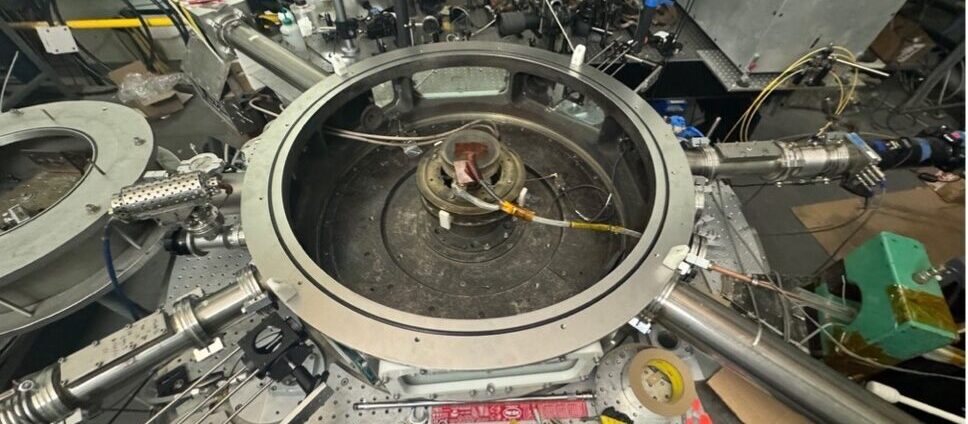
Mykonos pulsed power driver

Defense

Pulsed magnetic science plays a crucial role in national defense by enabling the study and mitigation of high-energy electromagnetic and radiation effects on critical systems. Nuclear detonations produce intense gamma rays, x-rays, and neutrons, which generate powerful electromagnetic pulses (EMPs) capable of disabling electronic systems over vast areas. Beginning in the 1950s, weapons scientists recognized the severity of these effects, as EMPs disrupted military infrastructure and electronics, posing significant risks to defense operations.

Pulsed power systems allow researchers to replicate these extreme conditions in a controlled environment, enabling the development of hardened electronics, resilient communication networks, and next-generation defense technologies. By simulating nuclear-driven electromagnetic and radiation environments, pulsed magnetic science helps engineers design systems that can withstand EMPs, radiation bursts, and other high-energy threats. These advancements ensure the reliability of military and national security assets in the face of emerging threats, reinforcing strategic deterrence and battlefield resilience.

Mykonos pulsed power driver

Energy

Pulsed magnetic science plays a critical role in the pursuit of fusion energy, a process that powers the sun by fusing atomic nuclei and converting mass into kinetic energy. In pulsed magnetic fusion, a fuel capsule is rapidly compressed using intense magnetic forces generated by fast-rising electrical currents. This process heats and inertially confines the fuel, enabling the fusion of hydrogen into helium and releasing vast amounts of energy. By leveraging pulsed power, fusion can be achieved with lower stored energy and in significantly more compact systems compared to competing technologies.

Fusion has the potential to revolutionize global energy production by providing a nearly limitless, carbon-free, and always-available power source. Unlike fossil fuels, fusion does not emit greenhouse gases or contribute to air pollution, and unlike fission, it does not produce high-level radioactive waste or pose a meltdown risk. The successful development of pulsed magnetic fusion could lead to scalable and economically viable fusion power plants, offering a sustainable energy solution for electricity generation, transportation, and industrial applications.

Mykonos pulsed power driver

Scientific Discovery & Diagnostic Instruments

Pulsed magnetic science is a powerful tool for exploring fundamental physics, advancing plasma science, and developing cutting-edge diagnostic techniques. By generating extreme magnetic fields, high-energy-density plasmas, and dynamic compression conditions, pulsed power systems allow researchers to investigate states of matter that are otherwise inaccessible. These capabilities are essential for studying astrophysical phenomena, nuclear fusion processes, and material behavior under extreme pressures and temperatures.

Beyond fundamental research, pulsed power-driven radiation sources provide unique diagnostic tools with applications in imaging, spectroscopy, and non-destructive testing. High-intensity x-ray and neutron bursts enable detailed studies of dynamic events, improving our ability to probe materials, detect structural weaknesses, and refine experimental techniques. From advancing our understanding of the universe to improving national security and industrial applications, pulsed magnetic science continues to push the boundaries of what is possible in experimental physics and technology development.

Latest News from ZNetUS

22 / Oct / 2025
Evolution of the electrothermal instability (ETI) on an intensely Ohmically heated z-pinch rod under conditions of dynamically applied axial magnetic field
13 / Oct / 2025
Resistive diffusion and radiative cooling effects in magnetized oblique shocks
mykonos facility
20 / Feb / 2025
2024 Mykonos Facility Report Published
interferometer min
10 / Feb / 2025
Recently developed interferometer allows for low density plasma measurements in MITLs
Graduate student Joe Chen works with professor Ryan McBride
11 / Jun / 2024
Self-driven ion deflectometry measurements using MeV fusion-driven protons and accelerated deuterons in the deuterated hybrid x-pinch on the MAIZE LTD generator
drag

Call for Proposals

Now accepting proposals for research projects at our facilities. Your proposals will be reviewed by our team and grants awarded to researchers who meet criteria.

person working with high voltage